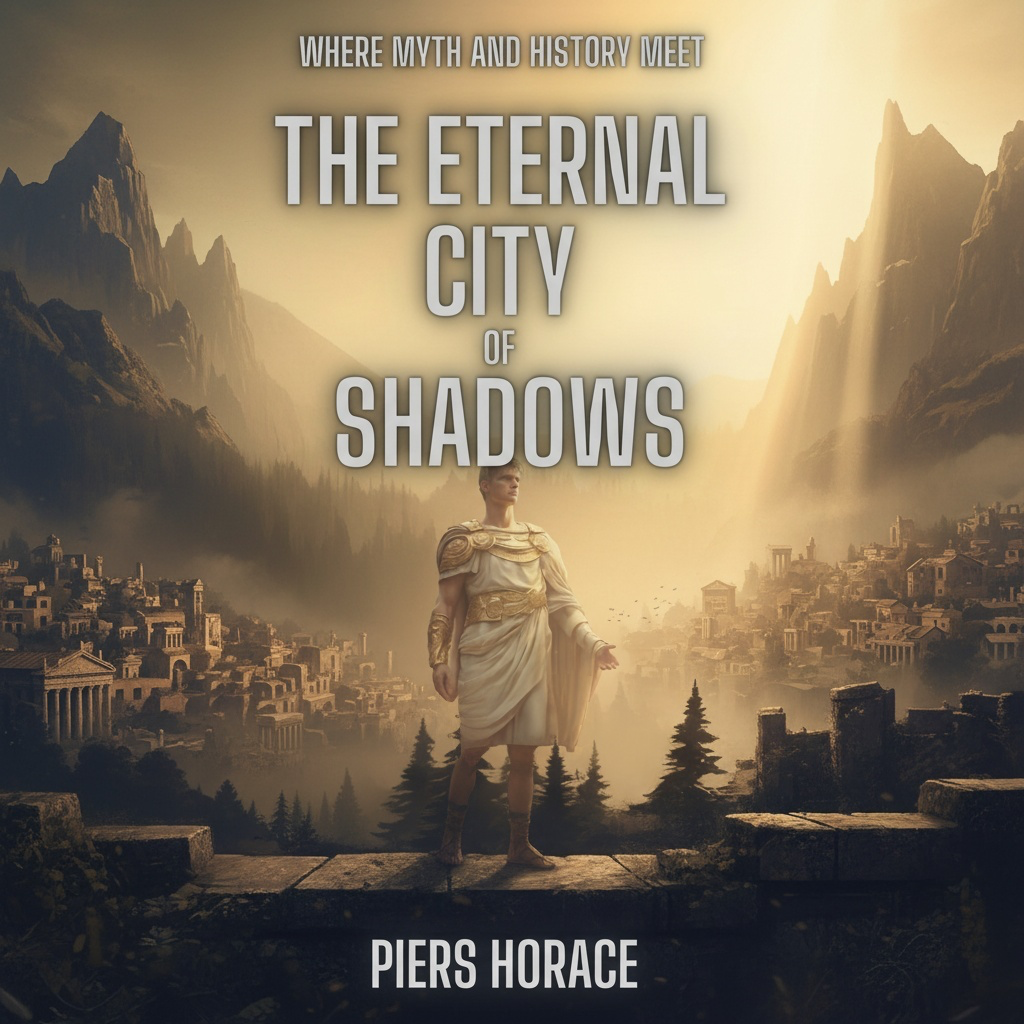
The Eternal City of Shadows

Where myth and history meet

A$29.00

Step into the shadows of antiquity…

The Eternal City of Shadows by Piers Horace is a spellbinding historical fantasy audiobook where myth and reality breathe side by side. As you journey through the winding streets of an ancient city, every whisper carries a secret, and every stone remembers a legend.

At its core, 15 characters shape this story, intertwined with the city's fate—struggling between power and loyalty, gods and mortals, light and darkness, and hidden figures. Through intrigue, betrayal, and suspense, the past is brought vividly to life.

30+ hours of narrated storytelling.

Let these fifteen voices take you where no one else dared to go. Richly atmospheric and deeply immersive, this audiobook is crafted for listeners who crave historical storytelling and timeless adventure. Close your eyes, listen closely, and let the Eternal City speak to you.

Timeline: The Eternal City of Shadows

Part 1 of 12 Parts


Setting: Rome, 40 BC
Four years after Julius Caesar's assassination.


Chapter I
Narrator: Octavianus
Octavianus reflects on Caesar's legacy while standing by the Tiber, then encounters the mysterious Livia Drusilla at a well and is immediately captivated by her beauty and apparent prophetic abilities.


Chapter II
Narrator: Livia
Livia contemplates her powerful attraction to Octavianus while concealing her true noble identity, and returns home to concerned parents who warn her about the dangers of associating with Caesar's heir.


Chapter III
Narrator: Octavianus
Octavianus prepares for Jupiter's Day celebration with his advisor Agrippa, who counsels caution about military strategy, duty and romantic entanglements.


Chapter IV
Narrator: Octavianus
On Jupiter's Day, Octavianus delivers a rousing speech to the Roman people about unity, strength, and resistance against enemies, positioning himself as Rome's protector and unifying leader.


Chapter V
Narrator: Livia
Livia watches Octavianus's commanding performance during the Jupiter's Day celebration from the crowd, feeling both admiration and an ominous sense that danger lurks beneath the festivities.


Chapter VI
Narrator: Cirus
The rebel spy Cirus infiltrates the Jupiter's Day celebration to gather intelligence, then rides to the rebel camp in Perusia to report to his master Lucius about Octavianus's defences and movements.


Chapter VII
Narrator: Lucius
Rebel leader Lucius, secretly supported by Marcus Antonius, receives Cirus's intelligence and prepares to launch his rebellion against Octavianus, driven by ideals of restoring Roman freedom.


Chapter VIII
Narrator: Agrippa
Agrippa counsels Octavianus in his study about the approaching rebel threat, warning against overconfidence and emphasising the need for strategic thinking over mere military superiority.


Chapter IX
Narrator: Octavia
Octavianus's sister Octavia confides in her brother about her pain over Marcus Antonius's neglect and his affair with Cleopatra, while Octavianus promises to do what is necessary for Rome.


Chapter X
Narrator: Agrippa
Agrippa and Octavianus receive urgent intelligence that Lucius's rebel forces are advancing rapidly from Perusia, prompting them to mobilise their legions and prepare for imminent warfare.

HISTORICAL

  • Agrippa's specific military counsel, in which his role as advisor is historically attested.

  • Tensions between Octavianus and various factions marked the Political situation after Caesar's death.

  • Antonius and Cleopatra's relationship is well known to historians.

  • Jupiter festivals and religious celebrations honouring Jupiter were central to the Roman calendar; the Ides were sacred to Jupiter, and festivals such as Epulum Jovis were held regularly.

  • The general strain and tension between Octavianus and Antonius, mediated by Octavia, is historically based.

  • The rebel activity around Perusia was real, and there were various uprisings in Rome during this period.


FICTION

  • Dialogue and internal thoughts.

  • All conversations and personal reflections are imagined.

  • The Specific encounter between Octavianus and Livia at the well is fictional.

  • The detailed plot of the rebellion involving Lucius and Cirus was designed to immerse the reader in a more thrilling experience.

  • The personal relationships, family dynamics, and romantic developments intertwined with each character were used to guide the story toward its conclusion.

  • Livia's prophetic abilities might not be real. However, she was known for political acumen, and claims of foresight are part of the ‘Poetic Licence.’

  • The particular speech on Jupiter's Day
    celebration and the details described in the plot are fictional, depicted to paint the resemblance of Roman days


PLAUSIBLE

  • The political machinations and the underlying power struggles reflect historical realities, but specific details are imagined.